Introduction: The Heroic Management Trap
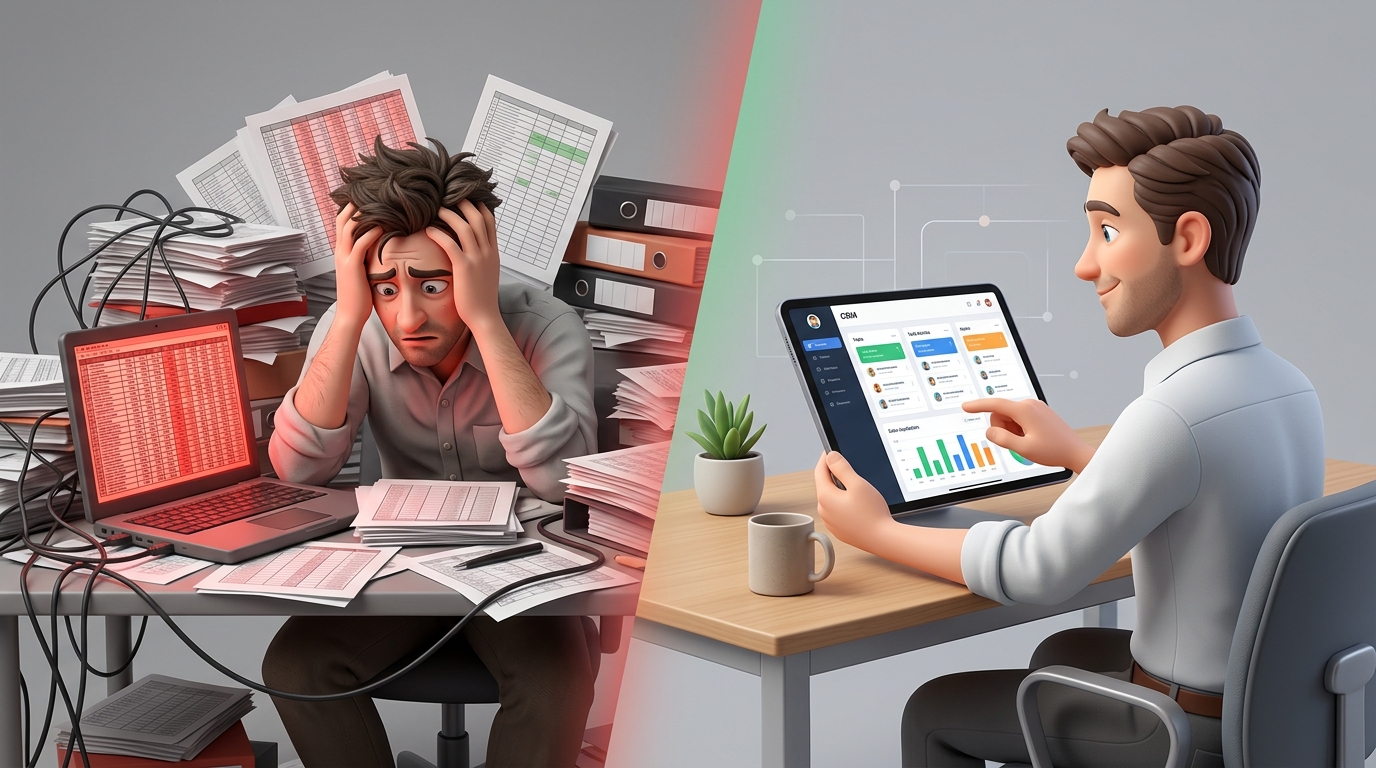
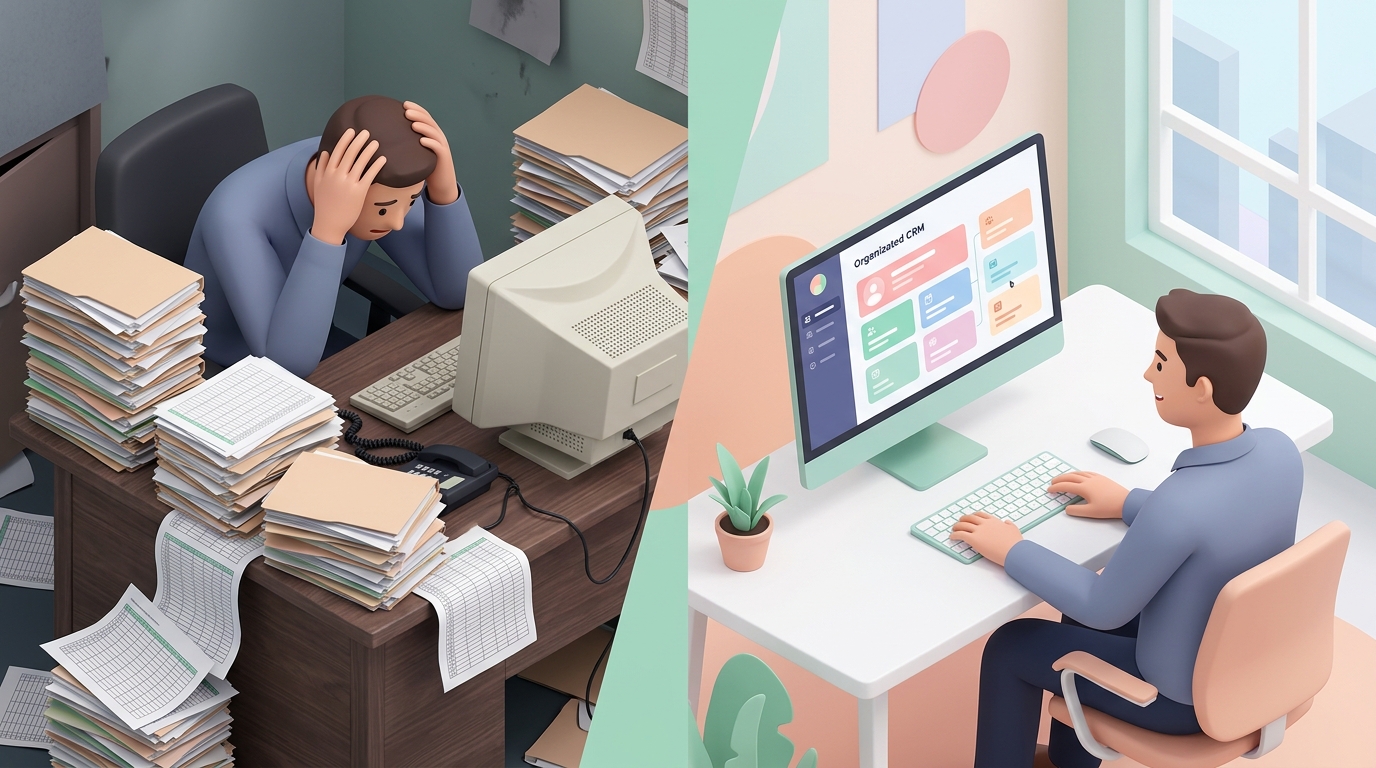
Imagine a typical morning for a medium-sized business owner. Their day starts not with coffee, but with dozens of messages in messengers, missed calls from managers, and attempts to figure out why yesterday’s important order was never shipped. They feel like a hero, putting out fires every day. But the truth is, this heroism is a sign of a weak system. In today’s world, where decision-making speed is measured in seconds, humans are physically and cognitively beginning to lose to the system. This doesn’t mean people are no longer needed. It means people should no longer perform work they weren’t created for: monotonous data collection, deadline monitoring, calculations, and transferring information between departments. When a business relies on the memory of a specific employee, it becomes fragile. Any illness, vacation, or simply a manager’s bad mood turns into financial losses. In this article, we will analyze exactly where a human becomes the “bottleneck” of your business and why process automation is the only way to scale without chaos. We’ll talk about how digital transformation changes the rules of the game and why ignoring technology today is a conscious choice in favor of tomorrow’s defeat.
Response Speed: Why the Customer Won’t Wait
The first and most obvious area where a human loses to a system is speed. In marketing, there is a “golden five minutes” rule. If you don’t respond to a potential customer’s request within this time, the conversion probability drops by 80%. A human, even the most motivated one, has physical limitations. They might be at lunch, talking to another client, or simply not notice a notification. Sales automation solves this problem instantly. A CRM system captures the lead, automatically sends a welcome message or a commercial proposal, and assigns a task to the manager. While the human is just opening their laptop, the system has already started “warming up” the client. Consider a scenario: you have an online store. A customer leaves a request at 11:00 PM. A manager will see it at 9:00 AM the next day. During those 10 hours, the customer could have found a competitor who set up an automatic response or a chatbot. The system works 24/7; it doesn’t get tired and has no days off. This is where the huge potential for growth lies: while your competitors sleep, your system closes deals.
Data Accuracy and “Fat Fingers”: The Human Factor Problem
The human factor is the most expensive mistake in business. We call it the “fat fingers” problem—when a manager makes a mistake by one zero in an invoice or forgets to put a comma in a contract. In Excel spreadsheets, which many entrepreneurs love so much, one wrong formula can lead to a company operating at a loss for months without even suspecting it. A system doesn’t make mistakes. If the algorithm is set up correctly, it will perform calculations with perfect accuracy millions of times in a row. Business efficiency directly depends on data purity. When data is entered manually, chaos ensues: one manager misspelled a client’s last name, another didn’t provide a phone number. As a result, the database turns into a trash heap. An automated CRM or ERP system validates data at the entry stage. It won’t allow creating an order without mandatory fields or with incorrect details. This saves hundreds of hours on fixing errors in the future.
Case #1: Optimizing Warehouse Logistics
An auto parts sales company had a warehouse with 5,000 items. Accounting was kept in Excel. Due to human errors (placed in the wrong spot, recorded incorrectly), the discrepancy in balances at the end of the month was up to 15%. This led to promising customers goods that were not in stock. After implementing a warehouse automation system using barcoding:
- Inventory time was reduced from 3 days to 4 hours.
- Order picking errors decreased by 95%.
- Shipping speed increased 2.5 times without hiring new employees.
The numbers speak for themselves: the system did what was impossible for a team of ten people.
Scaling: When Quantity Doesn’t Turn Into Quality
Many business owners believe that to grow, they just need to hire more people. But this is an illusion. There is a tipping point after which every new employee brings more chaos than profit. This happens because of communication complexity. If you have 2 employees, there is 1 communication channel between them. If you have 10, there are 45 channels. If you have 100, communication becomes unmanageable. A system scales differently. Process automation allows you to increase transaction volumes 10-fold without linearly increasing staff. You simply add server capacity or buy additional licenses. The system ensures a single standard of work for everyone. A new employee joining an automated company gets up to speed faster because the system “leads” them by the hand through checklists and configured funnels. Without a system, training every newcomer is an individual feat by an experienced manager who, instead of selling, spends time explaining elementary things.
Analytics vs. Intuition: How to Make Decisions
Where else does a human lose to a system? In the ability to analyze large datasets. Humans are prone to cognitive biases. We remember the last successful case and consider it the rule, ignoring statistics. We make decisions based on “feelings.” A system operates with facts. Business digitalization gives the owner a Dashboard where they can see in real-time: Customer Acquisition Cost (CAC), Lifetime Value (LTV), conversion at each funnel stage, and the profitability of each individual product. Trying to collect this data manually from several tables will take weeks. By the time the report is ready, it will have already lost its relevance. The system generates a report in one second. This allows for management decisions based on a real picture of the world, not “a finger in the sky.” This is what distinguishes professional management from amateur.
Case #2: Marketing Automation in the Service Sector
A network of dental clinics spent huge budgets on advertising but couldn’t track where patients were coming from. Administrators often forgot to ask “how did you hear about us?” After implementing end-to-end analytics and CRM integration:
- It turned out that 40% of the advertising budget was spent on ineffective channels.
- Automatic SMS visit reminders reduced the number of no-shows by 30%.
- Thanks to automatic review collection, the clinics’ rating on maps grew from 4.1 to 4.8 in six months.
The business started earning more without increasing advertising costs, simply through a systematic approach.
Comparative Characteristics: Human vs. System
For clarity, let’s compare the work of a human and an automated system across key parameters:
- Memory: A human forgets conversation details after 2 days. The system stores the entire interaction history for years.
- Emotions: A human can be rude to a client due to a bad mood. The system is always polite and follows the script.
- Multitasking: A human loses focus when switching between tasks. The system processes thousands of requests simultaneously.
- Cost: A human requires salary, taxes, sick leave, and an office. A system is a one-time investment in development and small maintenance costs.
- Control: A human needs to be controlled (management). The system itself controls the execution of rules.
Of course, humans have strengths: creativity, empathy, the ability to solve non-standard problems. But that’s exactly why we must free people from routine, so they can use their true potential where the system is powerless.
Conclusion: How to Stop Losing
Today, the question is not “to automate or not.” The only question is when you will do it: now, to gain a competitive advantage, or later, when you start losing market share. A human loses to a system in speed, accuracy, and scalability, but wins in strategic thinking. Your task as a leader is to stop being part of the mechanism and become its architect. Business automation is not about replacing people with robots. It’s about creating an environment where every employee becomes as effective as possible because the system takes on everything boring, complex, and repetitive. This is the path from chaos to predictable profit. If you feel that your business has hit a “glass ceiling,” most likely the problem is not the people, but outdated management methods. It’s time to move to a new level.
Want to change the situation in your business?
We at Devorno specialize in developing custom solutions for business process automation. If you want to find out which specific areas of your business can be automated today to free up time and increase profit—we are ready to help. Let’s conduct an audit of your processes and find growth points together. Write to us, and we will discuss how to turn your business into a well-coordinated system.